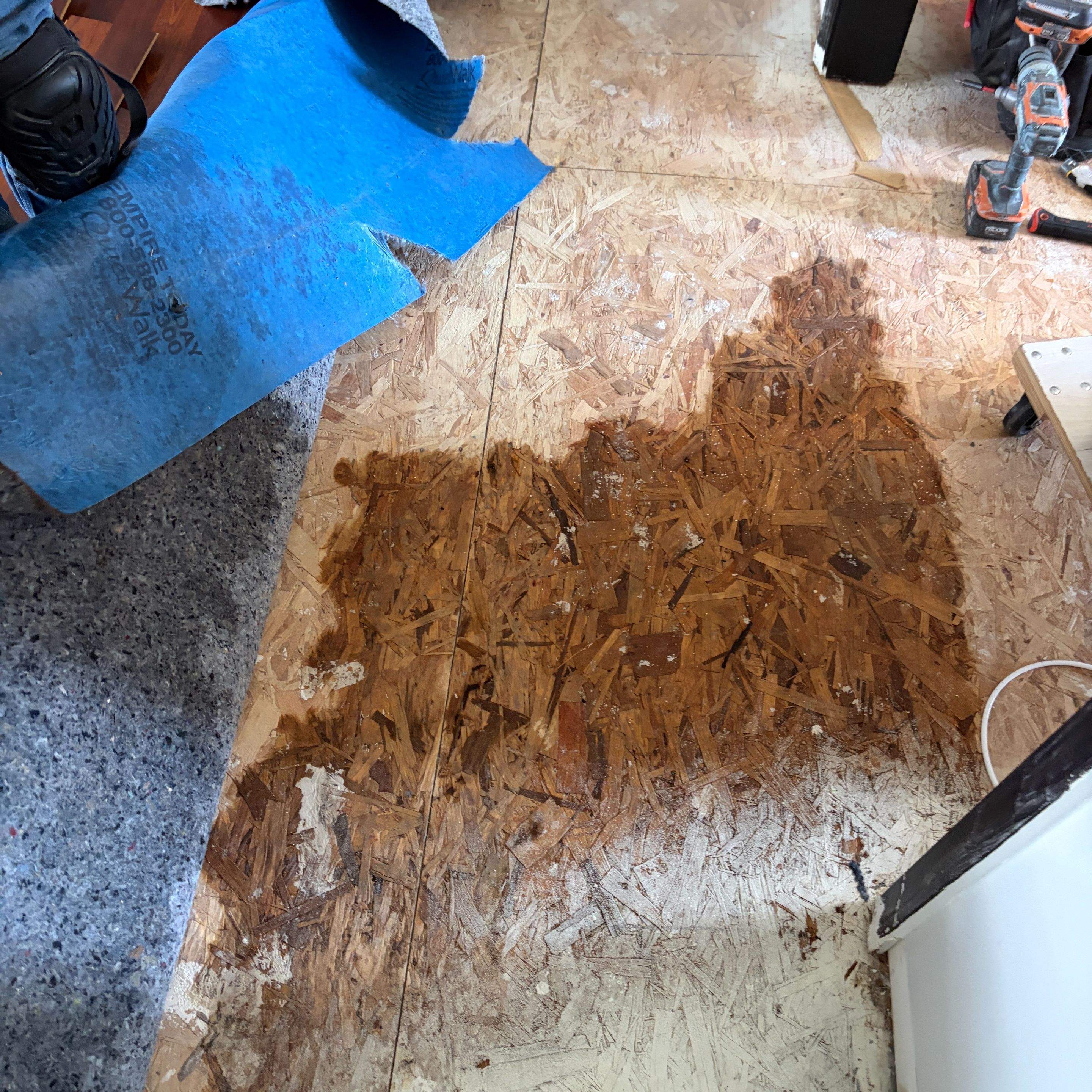
The 6 Phases of Emergency Water Mitigation
Every legitimate mitigation job in Williams Glen follows the same backbone. If a contractor skips a step, ask why.
- Emergency call and dispatch within 30 to 60 minutes
- Source control and safety check at arrival
- Water extraction with truck-mounted or portable units
- Moisture mapping using meters and thermal imaging
- Structural drying with air movers and dehumidifiers
- Daily monitoring until dry standard is reached
Each phase has a purpose. Skip extraction and you waste days on drying. Skip mapping and you miss hidden moisture behind walls.
What to Do Before the Crew Arrives
You have a 30 to 60 minute window. Use it well.
- Shut off the water at the main valve if the source is plumbing
- Kill power to affected rooms at the breaker if water is near outlets
- Move pets, kids, and valuables to a dry floor
- Photograph everything before you move it (insurance needs this)
- Pull up area rugs so they do not bleed dye into hardwood
- Do not use a household vacuum on standing water
- Do not walk through water near submerged electronics
If you suspect a sewage source or backup, stay out of the water entirely and call us for sewage cleanup protocols. Category 3 water carries pathogens that need PPE and containment.
Quick Documentation Checklist for Your Claim
Insurance adjusters work from photos and timelines. The more you capture in the first hour, the smoother your claim runs.
- Wide shots of every affected room from each corner
- Close-ups of damaged baseboards, cabinets, and flooring seams
- Photos of the source (burst pipe, appliance, ceiling stain)
- Serial numbers on damaged electronics and appliances
- Receipts or rough values for high-ticket contents
- A written timeline noting when you discovered the loss
Equipment That Actually Dries a Home
A consumer box fan does not dry a wet wall. Real mitigation uses commercial gear sized to the cubic footage of the loss.
- Truck-mounted extractors pulling 100+ gallons per hour
- Submersible pumps for basements with 2+ inches of standing water
- Low-grain refrigerant dehumidifiers pulling 130 to 250 pints per day
- Desiccant dehumidifiers for larger commercial losses
- Axial air movers placed every 10 to 16 linear feet of wet wall
- Heat drying systems for hardwood and dense materials
- Injectidry panels for wall cavities and under cabinets
A typical Williams Glen water loss in a 1,500 square foot area needs 6 to 12 air movers and 2 to 3 dehumidifiers running for 3 to 5 days. That is the standard, not the exception.
The science behind the gear matters too. Air movers do not dry by themselves. They lift moisture off surfaces into the air, where the dehumidifier captures it and drains it away. Without enough dehumidification capacity, you are just blowing humid air around the room and feeding mold growth. Williams Glen Water Restoration sizes equipment based on the psychrometric load, not guesswork.
Common Hidden Moisture Spots We Always Check
Surface water is obvious. The damage that turns into mold weeks later is the moisture you cannot see. On every Williams Glen job, Williams Glen Water Restoration inspects these areas with pin meters and thermal imaging:
- Behind baseboards and inside the bottom wall plate
- Under vinyl, laminate, and floating floors
- Inside kitchen toe-kicks and under dishwashers
- Wall cavities between studs, especially on exterior walls
- Subfloor framing visible from the basement or crawlspace
- Insulation in ceilings below a second-floor loss
- HVAC ductwork and return chases
If any of these read above the dry standard, they get drying attention. Skipping a hidden pocket is how a clean job turns into a mold remediation job 30 days later.
IICRC Water Categories and Why They Change Your Bill
The category of water dictates what gets dried versus what gets removed. This is also where insurance adjusters focus.
- Category 1 (clean water): supply lines, rain intrusion, water heater leaks. Most materials can be dried in place.
- Category 2 (grey water): dishwasher discharge, washing machine overflow, aquarium leaks. Some porous materials get removed. See our grey water damage breakdown for specifics.
- Category 3 (black water): sewage, toilet overflow past the trap, floodwater. Carpet, pad, and saturated drywall come out. No exceptions.
Category creep is real. Clean water sitting 48 hours can become Category 2. That is why fast response saves you money.
How Long Drying Actually Takes
Homeowners ask this question first and it is the right one.
- Extraction: 1 to 4 hours depending on volume
- Drywall and framing: 3 to 5 days
- Hardwood floors: 5 to 14 days with specialty drying mats
- Concrete and masonry: 7 to 21 days
- Plaster walls: 5 to 10 days
We measure daily. When moisture content matches the dry standard for unaffected areas, drying is done. Not a day sooner, not a day longer.
Red Flags When Hiring a Mitigation Company
Not every Williams Glen contractor handles water losses the right way. Watch for these:
- No IICRC certification on staff
- No moisture readings logged daily
- Pressure to sign an unlimited assignment of benefits
- Vague pricing with no scope sheet
- Uses only fans, no dehumidifiers
- Cannot explain Category 1, 2, or 3 when asked
- No written drying log or final moisture report
If you are still vetting, our guide on choosing a water damage company walks through the questions to ask before you sign anything.
What Happens After Drying Is Complete
Mitigation ends when the structure is dry. Restoration begins after.
- Final moisture verification across all affected materials
- Antimicrobial application where appropriate
- Removal of containment and equipment
- Written final report for your insurance carrier
- Scope handoff for drywall, flooring, paint, and trim rebuild
Some homeowners stay with us through rebuild. Others take the report to their preferred contractor. Either path is fine with us. The goal is the same: a home that is dry, safe, and documented well enough that no one questions the work six months from now.
Realistic Costs for Mitigation in Williams Glen
Numbers vary by square footage, category, and material. Here is the honest range we see in Central Indiana:
- Small loss (one room, Category 1): $1,200 to $3,500
- Medium loss (multi-room or basement, Category 1 or 2): $3,500 to $8,000
- Large loss (whole floor, hardwood, Category 2): $8,000 to $18,000
- Category 3 with sewage: add $2 to $7 per square foot for containment and disposal
- Hardwood floor drying with mats: $1,500 to $4,500 per room
Most homeowner policies cover sudden and accidental water events. Flood from groundwater typically needs a separate flood policy. We document everything so your adjuster has what they need.
What Drives the Final Invoice Up or Down
- Access: tight basements and second-floor losses cost more to stage
- Material type: engineered hardwood and plaster dry slower than drywall
- Contents work: pack-out, off-site drying, and storage add line items
- Containment: Category 3 jobs need plastic barriers and HEPA filtration
- After-hours response: some companies add a premium, Williams Glen Water Restoration does not